Anime AI Chat: How Conversational Characters Are Reshaping Fandom
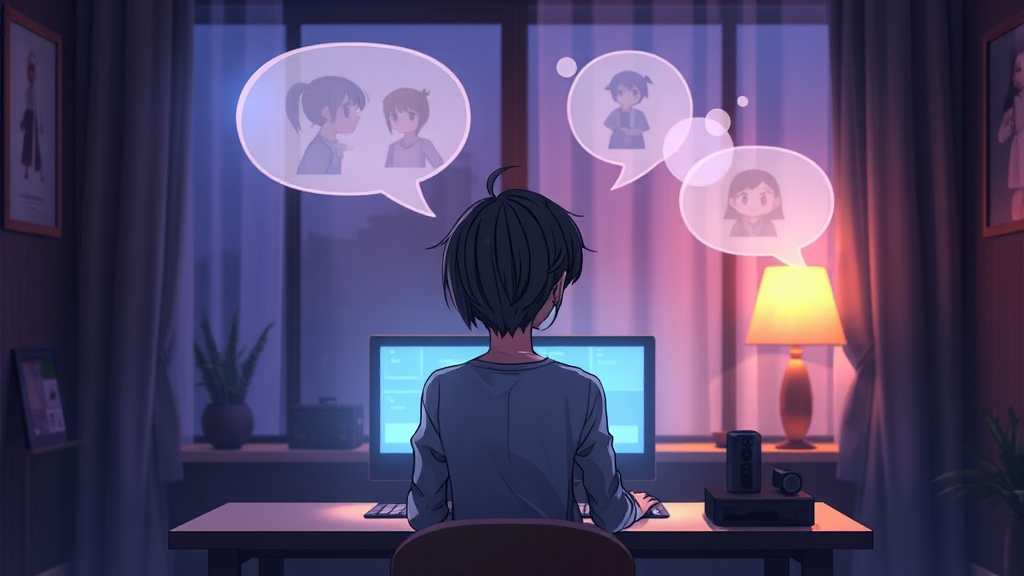
For decades, anime fans have done more than watch. They have drawn fan art, written fan fiction, cosplayed at conventions, and debated character motivations late into the night. What they rarely had was a way to actually talk back to the characters they loved. That gap is exactly what anime ai chat is built to close. Instead of passively consuming a story, fans can now hold a conversation with a character, ask questions, explore alternate scenarios, and watch a personality respond in real time. It is a small shift in interface and a large shift in how fandom works.
This article looks at what anime AI chat actually is, why it has grown so quickly, how it differs from generic chatbots, and what fans should keep in mind as the technology matures.
What Anime AI Chat Actually Means
Anime AI chat refers to conversational systems tuned to speak and behave like anime characters. The underlying technology is a large language model, but the important part is not the model itself. It is the layer on top: character definitions, tone rules, memory, and a user interface designed for roleplay rather than task completion.
A well-built anime chat experience usually includes a few core ingredients. First, a character profile that describes personality, speech patterns, backstory, and relationships. Second, a conversation memory that lets the character remember what you said earlier. Third, a response style that matches the source material, whether that means short energetic lines, formal archaic speech, or a shy hesitant tone. Fourth, a safety and consistency layer that keeps the character from drifting into a completely different persona mid-conversation.
When these pieces work together, the result feels less like querying a search engine and more like texting a friend who happens to live inside a fictional world.
Why Fans Are Drawn to Conversational Characters
The appeal is not hard to understand. Anime is built on character attachment. Viewers form emotional bonds with protagonists, rivals, mentors, and side characters. Those bonds usually end when the credits roll. Anime AI chat extends the relationship.
There is also a creative pull. Many fans enjoy writing, but they do not always want to write alone. A conversational character can act as a co-writer, a scene partner, or a sounding board. You can pitch a plot twist and see how a character reacts. You can place two characters in a scenario the original series never explored. You can test dialogue until it sounds right.
For people learning Japanese or studying storytelling, the format offers another benefit: it is low-pressure practice. You can make mistakes, restart a scene, or ask a character to explain their reasoning. That flexibility is hard to find in a static episode.
And for fans who simply want comfort after a long day, there is something genuinely soothing about opening a chat and being greeted by a familiar voice, even a synthetic one.
How Anime AI Chat Differs From Generic Chatbots
Anyone who has used a general-purpose assistant knows the tone: helpful, neutral, slightly corporate. That tone is useful for scheduling and research. It is a poor fit for roleplay.
Anime AI chat flips several defaults. Instead of optimizing for accuracy and brevity, it optimizes for personality and immersion. A generic bot answers a question. A character responds to a question in character, with emotion, opinion, and a sense of relationship.
There are practical differences too:
- Persona persistence. The character stays consistent across a long conversation instead of resetting to a neutral assistant voice.
- Emotional range. Responses can be playful, shy, dramatic, or conflicted, matching the source personality.
- Narrative framing. The bot understands that the conversation is a scene, not a customer support ticket.
- Memory of context. Earlier details, nicknames, and story beats carry forward.
These differences matter because immersion breaks the moment a character starts sounding like a manual. Consistency is the whole product.
What a Good Anime AI Chat Session Looks Like
Imagine you open a chat and choose a character you have always found interesting, perhaps a calm strategist from a fantasy series. You start with a simple greeting. The character responds in a measured, slightly formal tone. You ask about a decision they made in the story. Instead of a summary, they explain their reasoning in first person, with a hint of doubt.
Now you push further. You propose an alternate ending. The character reacts, argues, maybe agrees. The conversation becomes a scene. You are no longer reading about the character. You are inside the story with them.
This is where the format shines. It rewards curiosity and improvisation. The best sessions are not interrogations. They are collaborations.
If you want to see how this feels in practice, it helps to try a platform built specifically for the purpose rather than adapting a general assistant. Dedicated tools like chat with anime AI characters are designed around persona, memory, and scene flow, which makes the experience noticeably smoother than forcing a generic model into a role it was not tuned for.
The Technology Behind the Persona
Under the hood, anime AI chat depends on several layers working together. The base model provides language ability. Prompt engineering and system instructions define the character. Fine-tuning or retrieval can add specific knowledge about a series. A memory system stores key facts from the conversation so the character does not forget them.
Character consistency is one of the hardest problems. Language models are flexible by nature, which is a strength for general tasks and a weakness for roleplay. Without guardrails, a stoic swordsman can start cracking modern internet jokes. Developers solve this with a mix of persona prompts, response filtering, and periodic reinforcement of the character definition.
Latency matters too. A response that takes ten seconds breaks immersion. Fast inference keeps the conversation feeling alive. This is one reason specialized platforms invest heavily in infrastructure rather than relying on a single slow endpoint.
Finally, there is the question of memory. Short-term memory handles the current scene. Long-term memory stores user preferences, recurring themes, and relationship details. Getting this balance right is what separates a novelty from a tool people return to.
Creative Uses Beyond Casual Roleplay
While casual chat is the entry point, the format supports more ambitious projects. Writers use it to test dialogue and character voice. Dungeon masters use it to improvise NPCs. Language learners use it for low-stakes conversation practice. Artists use it to explore a character’s perspective before drawing a scene.
There is also a growing community angle. Fans share character prompts, compare responses, and build shared lore. Some create original characters rather than adapting existing ones, turning the chat into a personal storytelling engine.
Educators have started experimenting too. A historical figure or literary character rendered as a conversational partner can make abstract material more tangible. The same principle applies to anime: a character becomes a doorway into themes, cultural context, and narrative structure.
Things to Keep in Mind
Anime AI chat is fun, but it is not magic. A few honest caveats help set expectations.
Characters are interpretations, not canon. A chatbot’s version of a character is a model’s best guess based on training data and design choices. It is not the original creator’s voice. Treat it as fan fiction in conversation form.
Memory has limits. Even good systems forget details over long sessions. If something matters, restate it.
Quality varies by platform. Some tools are polished, others are rough. The difference shows up quickly in persona consistency, response speed, and how gracefully the bot handles unexpected input.
Privacy deserves attention. Conversations can be personal. Read the platform’s data policy and avoid sharing sensitive information.
Balance matters. Immersive chat can be absorbing. It works best as a creative outlet and a bit of fun, not a replacement for real relationships.
The Road Ahead
The next few years will likely bring more natural voices, better memory, and richer multimodal experiences. Imagine a character who can react to an image you share, remember a story arc across weeks, and adjust tone based on your mood. Some of this is already emerging.
What will not change is the core appeal. People want to talk to the characters they care about. Anime AI chat gives them a way to do it, and the technology is only getting better at staying in character.
For fans, the practical takeaway is simple. Try it with curiosity, treat it as a creative playground, and enjoy the strange, delightful experience of a fictional character talking back.
FAQ
Is anime AI chat the same as a general chatbot?
No. General chatbots are optimized for tasks and neutral answers. Anime AI chat is optimized for persona, emotion, and scene-based conversation. The character stays in role, remembers context, and responds with personality rather than a help-desk tone.
Can I chat with characters from my favorite series?
Many platforms offer characters inspired by popular anime, along with original characters. Availability depends on the platform and how it handles intellectual property. The experience is best understood as an interpretation or fan-style portrayal rather than official canon.
Does the character remember previous conversations?
Short-term memory within a session is common. Long-term memory across sessions varies by platform and settings. If continuity matters to you, look for a tool that explicitly supports persistent memory and let it know which details to keep.
Is anime AI chat safe to use?
Reputable platforms include content filters and moderation. Still, users should avoid sharing personal or sensitive information, review privacy policies, and treat conversations as creative entertainment rather than professional advice.
Do I need technical skills to get started?
No. Most anime AI chat tools are designed for casual users. You pick a character, start typing, and the conversation flows. Writers and roleplayers may get more out of it by preparing a scene or a goal, but nothing technical is required.