Blocked Drain in Itatiba? How to Choose a Desentupidora em Itatiba SP Without Guesswork
If you are searching for a desentupidora em Itatiba SP, the honest answer is that you are comparing three realistic options: a local general handyman, a dedicated drainage company, or an emergency 24-hour service. The right pick depends less on the price quote and more on what is actually blocking your pipe. A backed-up kitchen sink, a gurgling floor drain and a sewage smell in the yard are three different problems, and only one of them is usually solved by a plunger and patience.
What changed recently is how quickly a small blockage becomes a property problem. In 2026, older clay and cast-iron lines in central Itatiba are aging at the same time as newer condominiums add grease-heavy kitchens and undersized inspection covers. That combination means a slow drain is often the first visible symptom of a restriction that has been building for months. Choosing a provider before the emergency hits is the single most useful decision you can make this week.
What a Desentupidora em Itatiba SP Actually Needs to Handle
Before you call anyone, write down what the property needs. A reviewer’s checklist is boring, but it is the difference between a fixed drain and a repeat visit. Start with the type of line: kitchen waste, bathroom waste, stormwater, or sewage. Then note where the water backs up and whether the smell is inside or outside. These two facts alone narrow the field of providers dramatically.
The requirements below are the ones that matter in practice, not the ones that sound impressive on a flyer.
- Correct equipment for the pipe diameter — a hand auger will not clear a main sewage line, and a high-pressure jetter can damage fragile older pipes if the pressure is not adjusted.
- Inspection before and after — a camera check confirms what caused the blockage and proves the line is actually clear, not just flowing for an hour.
- Emergency availability — sewage backing into a ground-floor bathroom at 11 p.m. is not a next-Tuesday problem.
- Proper waste disposal — the material removed from a grease trap or septic system has to leave the property legally, not down the next storm drain.
- Clear pricing structure — a call-out fee, a per-metre charge, and a separate cost for jetting or camera work should be explained before anyone starts.
If a provider cannot answer basic questions about pipe material, access points and disposal, treat that as a warning. A desentupidora Itatiba team that works in the city regularly will already know the common layouts in local neighbourhoods and the usual weak points in older buildings.
Residential, commercial and condominium needs are not the same
A house with a single bathroom has one set of risks. A condominium with a shared vertical stack and a basement garage has another entirely. In buildings, the blockage is often below the ground-floor slab, and access may require coordination with the síndico, the plumbing plans, and neighbouring units. Commercial kitchens add grease and food solids that need degreasing, not just rodding.
This is why a generic quote is rarely useful. Ask the provider to describe how they would approach your specific layout. If the answer is “we will see when we arrive,” you have learned something important about how the job will go.
How the Job Should Actually Be Done, From Call to Cleanup
A professional drainage visit has a predictable shape. The order matters, because skipping a step is how a cheap fix becomes an expensive repair.
- Phone triage. The technician asks where the water backs up, whether other fixtures are affected, and whether there is a smell or overflow. This decides whether the visit is routine or emergency.
- On-site assessment. Access covers are located, the pipe material is identified, and the likely restriction point is estimated.
- Method selection. Manual rodding, an electric auger, or hydrojetting is chosen based on the blockage type and pipe condition. Grease and scale respond to jetting; roots and solid objects often need cutting first.
- Camera verification. After clearing, a camera confirms the line is open and reveals cracks, offsets or root intrusion that caused the problem.
- Cleanup and advice. Waste is removed, the area is rinsed, and you receive a short explanation of what to change to avoid a repeat.
The step most often skipped is the camera check. Without it, you know the drain is flowing but not why it blocked. That is exactly how the same line backs up again three weeks later.
What hydrojetting does that a plunger cannot
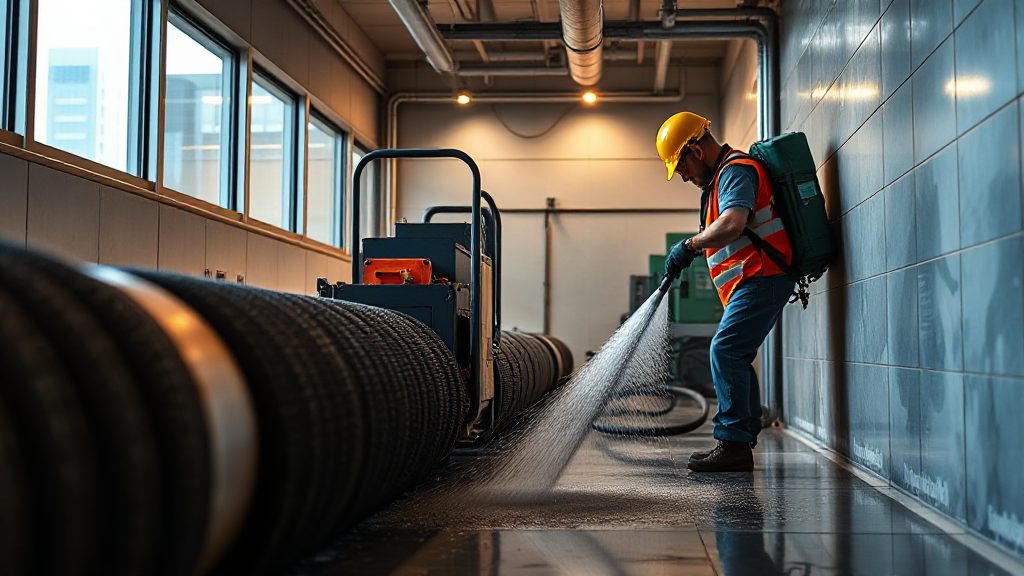
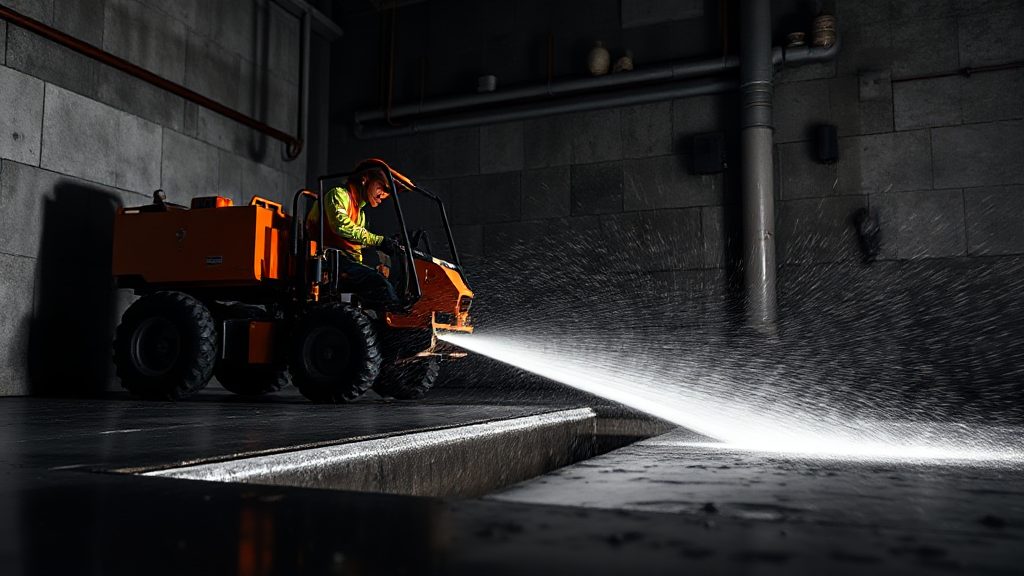
Hydrojetting uses controlled high-pressure water to scour the inside wall of the pipe. It removes grease, soap scale, silt and soft roots rather than simply pushing a plug further down the line. For restaurants, condominiums and any line with years of buildup, it is often the only method that restores the full diameter of the pipe.
It is not automatically the right choice everywhere. Very old or already-damaged pipes can be harmed by careless pressure, which is why the assessment step exists. A provider who offers jetting for every job without inspecting first is selling a service, not solving a problem.
Septic tanks and fossa cleaning are a separate job
Properties outside the main sewage network rely on a septic tank, and a full tank mimics a blocked drain: slow fixtures, gurgling, and odour. Pumping and cleaning the tank is not the same as clearing a pipe, and it should be scheduled on a maintenance interval rather than treated as an emergency. Ask how the removed material is transported and treated, because improper disposal is both illegal and a health risk.
For recurring problems, preventive maintenance is cheaper than emergency call-outs. A short annual inspection of the main line and a scheduled tank pump cost far less than replacing a saturated drain field or repairing a collapsed pipe under a finished floor.
What to Check Before You Sign Off on the Service
You do not need to become a plumber to judge a drainage job. You need to check a short list of things while the technician is still on site, because afterwards it becomes your word against theirs.
- Flow test on every fixture — run each sink, shower and toilet that shares the line, not just the one that was blocked.
- Visual proof — ask to see the camera footage or at least a clear description of pipe condition and any defects found.
- No new leaks — check joints and access covers for seepage after the work is finished.
- Written summary — the cause, the method used, and any recommended follow-up should be on paper or in a message.
- Clean area — wastewater and debris removed, floors rinsed, and no lingering sewage smell.
If the technician recommends a major repair, get the camera evidence and a second opinion before committing. A cracked pipe or a collapsed section is a real finding, but it should be demonstrated, not asserted.
Red flags that should end the conversation
Be cautious with providers who quote a very low call-out fee and then add charges once the equipment is on site. Be equally cautious with anyone who cannot explain where the removed waste goes or who refuses to put the scope of work in writing. A reputable desentupidora Itatiba SP operation will welcome these questions, because clear terms protect both sides.
Also watch for the opposite problem: a provider who insists on the most expensive method before inspecting anything. Good drainage work is diagnostic first. The method follows the evidence.
The comparison, in plain terms
| Option | Best for | Main limitation |
|---|---|---|
| Local handyman | Simple sink or shower clogs | Limited equipment; no camera or jetting |
| Dedicated drainage company | Grease, roots, main lines, septic tanks | Usually scheduled, not instant |
| 24-hour emergency service | Sewage backup, overflow, after-hours failures | Higher call-out cost outside business hours |
Most households in Itatiba need the middle option for planned work and the third only when something fails at a bad hour. Knowing which one you are calling prevents both overpaying and under-solving the problem.
The practical takeaway is simple: decide your requirements first, insist on inspection before treatment, and verify the result before the team leaves. Do that, and a blocked drain becomes a handled inconvenience rather than a recurring expense.